
Transforming trauma support
Dr Chris Bowden researches the impact of trauma on mental health and wellbeing, and designed a new postgraduate qualification in trauma-transformative support.
Dr Chris Bowden wants to design better support systems for people living with the impacts of trauma. He works tirelessly to educate the public and improve awareness of trauma and mental health issues, and has designed a new postgraduate qualification on trauma that is set to be launched by Te Herenga Waka—Victoria University of Wellington in 2027.
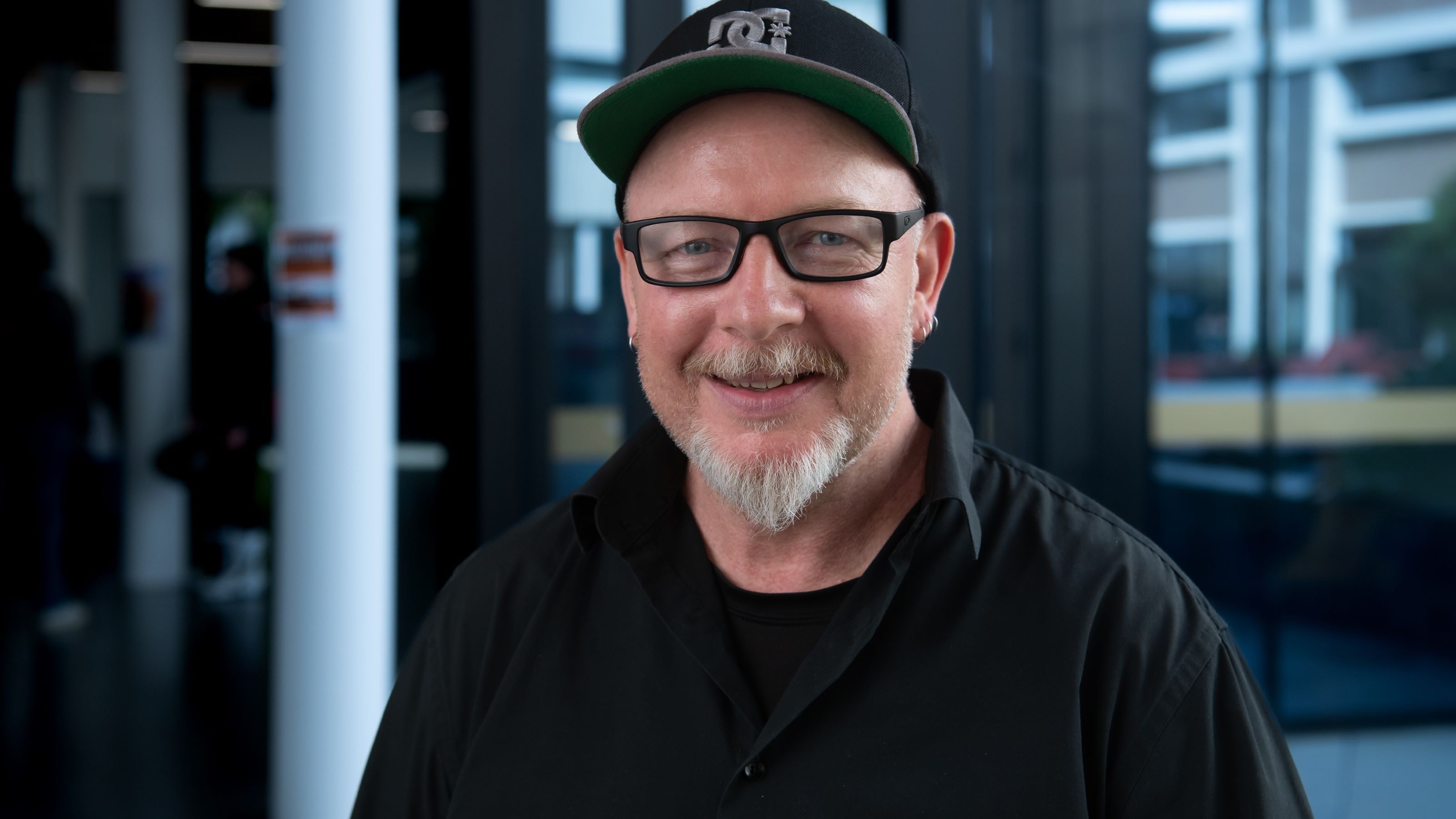
After losing three of his best friends to suicide in high school, and a further two friends while at university, Chris made it his mission to understand why people take their lives.
He embarked on a Master’s degree that researched adolescent suicide, and his doctorate focused on suicide bereavement. Since then, Chris has worked on projects involving male survivors of sexual abuse, and continues to research trauma-informed psychology and practice. He is the Director of Educational Psychology Programmes in Te Whānau o Ako Pai—School of Education and delivers community education, professional development and training on suicide prevention, postvention, and trauma.
A common thread linking all his areas of teaching and research is the impact of traumatic events and experiences on people, and the lasting effect of trauma for those left behind, especially after suicide.
“Trauma is very broad and can have a wide range of causes—it includes people who have experienced childhood or developmental trauma, interpersonal or complex trauma, historical, collective and cultural intergenerational trauma, systemic abuse and discrimination, and secondary [vicarious] trauma,” he says.
“We need to combine that lived experience with what the evidence tells us is effective, safe, and responsive—that information can then be used to design better, more effective support, and a system that does not retraumatise and cause further harm but promotes healing.”
In delving into these issues, Chris has uncovered a crucial need for more evidence-based, lived experience-informed, and culturally grounded support for survivors.
“At the heart of it, I've always been interested in how people cope and adapt, and what helps people make sense, heal, and move forward. And what I’ve found is that the provision of timely, effective, and responsive support is one of the most important things that separates the people who continue to struggle and those who go on to do okay. Access to good transformative support seems to be the difference,” he explains.
Turning insight into action
Chris developed and is the kaitiaki of Waves, New Zealand’s first nation-wide psycho-educational programme for adults bereaved by suicide in conjunction with Skylight Trust (now offered by Tony’s Place). He has trained hundreds of facilitators for this programme using his educational skills to help people learn about grief, trauma, how to cope, heal, and make sense of life after suicide bereavement.
Chris also sits on the Mental Health Foundation’s Suicide Bereavement and Postvention Support Advisory Group, providing advice and guidance on resource development, policy, and service delivery.
Additionally, Chris is the Academic Director of Mates in Construction—he guides and conducts research that focuses on monitoring the effectiveness and impact of the programme. This research helps with identifying and addressing psychosocial hazards in the workplace, and informs follow-up support or interventions for improving mental health and preventing suicide in the construction sector.

“The construction sector has one of the highest rates of suicide out of any of the professions, with men, rangatahi Māori, apprentices, and those with disabilities, injuries, and illnesses being the most at-risk groups. MATES goes into construction sites and teaches the workers how to look for signs of stress, distress, and mental health struggles in their fellow workers, and then how to offer help,” explains Chris.
The research he’s leading for MATES includes one of the largest health and wellbeing surveys of any industry—in 2025, 3,300 construction workers filled it out.
“That gives us a really good picture of the stresses these workers are dealing with—the demanding workload, physical challenges, financial, and social factors that can have a bad impact on their mental health. The survey also tells us what they’re doing to cope, which groups are most vulnerable, which are doing well, and how MATES interventions are making a difference.”
Chris says a lot of the MATES programme is delivered on construction sites, directly to the workers.
“We have Toolbox Talks which are short sessions delivered by field officers around the barbecue on work sites, and we also train connectors who work alongside and help workers who are in crisis and help them access support. We’ve also designed a programme especially targeting apprentices, who are often rangatahi Māori doing tough work on low pay, and living away from family support—that programme is now going to be piloted and delivered so that these apprentices are better prepared for the stresses of the industry, and have healthy coping mechanisms in place before they even set foot on a building site,” he says.
The MATES in Construction research shows that one of the biggest causes of stress across the whole construction sector is the ‘boom and bust’ nature of the industry.
“None of the construction companies have any control over the boom and bust cycle—when the work is there, everyone’s happy, and it’s great. But every few years the work bottoms out and a lot of workers move to Australia—the ones left behind face financial insecurity, and they are hopping from job to job,” says Chris.
“One of the main recommendations from the MATES 2025 Industry Wellbeing survey report was to embed worker wellbeing and mental health as a requirement at the government procurement stage so that it is no longer seen as an option or nice to have,” says Chris. “Another recommendation was to manage infrastructure planning and financing to make sure there is a steady stream of work and projects and job security.”
Helping the helpers
Chris spends a lot of time educating the public at conferences, seminars and hui on mental health issues, especially suicide prevention. He also works tirelessly to support his colleagues and professionals working at the front line dealing with survivors of trauma.
“I’m going out into the community teaching the psychologists, the psychiatrists, the social workers, the nurses—anybody dealing with survivors of trauma—to help them understand trauma and its impact, and how to provide safe, effective, responsive, lived experience-informed and trauma-informed support to these people.”
The huge amount of interest from practitioners across Aotearoa for Chris’ expertise has prompted the University to establish a new qualification to meet the continuous demand for his knowledge.
From the start of 2027, Te Herenga Waka will offer a fully online postgraduate qualification in trauma-transformative support—a first for the University and possibly Aotearoa—that Chris hopes will transform the way trauma support is delivered in this country.
“This new qualification is open to all social workers, counsellors, teachers, youth workers, lawyers, support workers, emergency department staff, doctors, midwives, or associated sectors who have a degree and want to get a better understanding of providing trauma-transformative support. It will be fully online, accessible and flexible, and people will be able to complete their studies while they’re working,” Chris says.
“The reason we're calling it ‘transformative’ is because it is based on the principles of trauma-transformative support, which acknowledges that people are not just affected by trauma but are part of systems that shape their trauma, experiences of support, and healing. It is about providing compassion and hope to survivors, but also transforming the contexts, organisations, and systems that survivors are connected to so that they are less retraumatising, safer, and more supportive of healing and change.”
Find out more about the postgraduate qualification in trauma-transformative support and the Te Whānau o Ako Pai—School of Education.